Gold vermeil, gold-plated, gold-filled: what the labels really mean
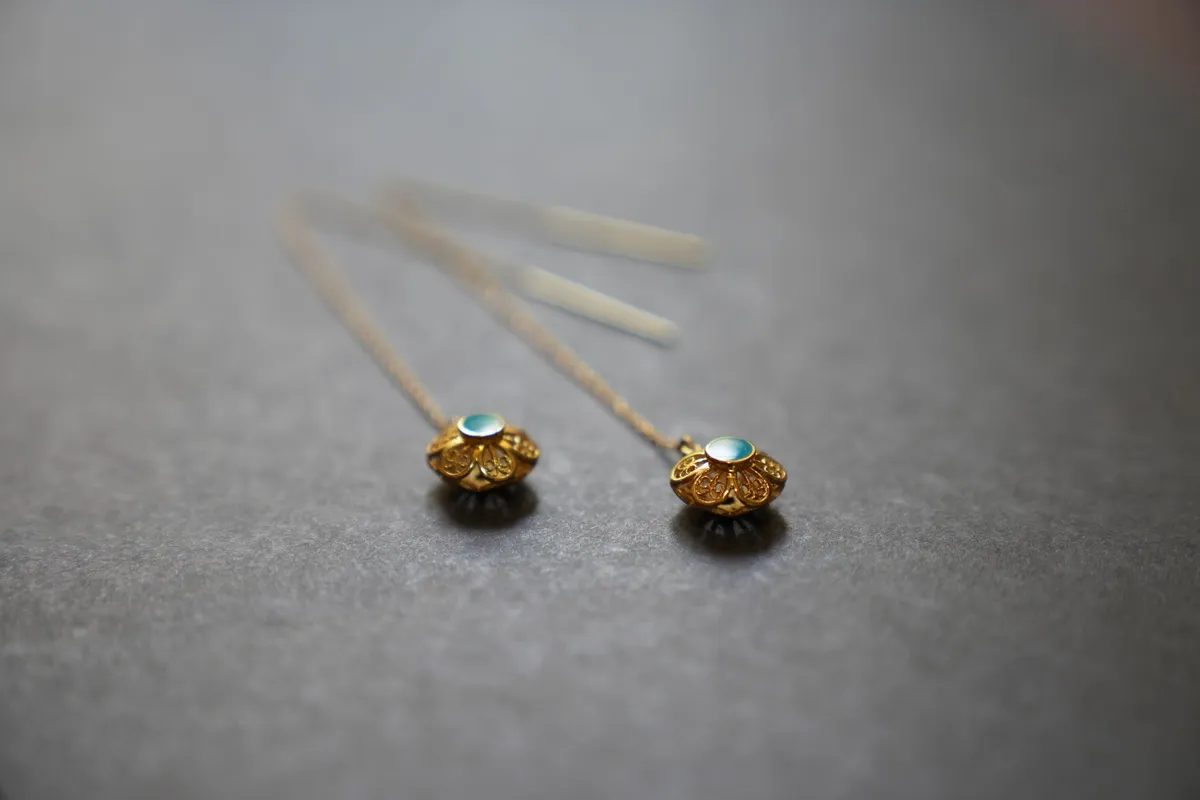
Two pairs of golden hoops can look identical on a display tray and differ tenfold in price. The explanation is usually in the small print: solid gold, vermeil, gold-filled, gold-plated. These terms describe very different constructions, with different lifespans. Knowing them helps you pay the right price for what you actually want.
Solid gold: the reference
A solid gold piece is made throughout of a gold alloy: 9, 14, 18 carats or more. Scratch it, polish it, resize it, and you will always find the same metal underneath. It does not wear through, and it keeps its value as precious metal. Our article on yellow, white and rose gold explains what carats and colours mean.
Everything else on this page is a way of putting a layer of gold on top of another metal. The questions are always the same: what is the base metal, and how thick is the gold?
Gold-plated
Gold plating means depositing a thin layer of gold onto a base metal, usually by electroplating: the piece is immersed in a solution and an electric current deposits the gold on its surface. The base can be brass, copper, stainless steel or silver.
- Thickness: it varies enormously, from a barely measurable “flash” of gold to several microns. A micron is a thousandth of a millimetre.
- Durability: a thin plating can wear through in weeks on a ring that rubs constantly, while a thicker one can last years on earrings that are rarely touched.
- Regulation: rules depend on the country. In France, for example, the term plaqué or is reserved for a gold layer of at least 3 microns; thinner coatings are sold as doré, or gilded.
Gold-plated jewelry is the most affordable way to wear the look of gold, and it suits fashion pieces you will change often. See our guide to fashion jewelry for more on what it is made of.
Vermeil
Vermeil (pronounced ver-may) is a specific kind of gold plating with two requirements: the base must be silver, and the gold layer must be relatively thick.
In the United States, trade guidance defines vermeil as sterling silver coated with gold of at least 10 carats, with a minimum thickness of 2.5 microns. Other countries use the word with their own conventions, so it is worth asking the seller what the specification is.
Why it matters:
- the silver base is itself a precious metal, so even when the gold wears, what appears underneath is sterling, not brass;
- the thicker layer lasts much longer than a standard flash plating;
- people with sensitive skin often tolerate vermeil better than plating over base metals, though reactions remain individual.
Gold-filled
Despite its name, gold-filled jewelry is not filled with gold. It is made by bonding a thick sheet of gold alloy to a base metal core, usually brass, with heat and pressure, then rolling or drawing the result into wire or sheet.
The gold layer is far thicker than in plating. Under United States trade guidance, a product sold as gold-filled must contain a gold layer representing at least one twentieth of the total weight, which is why you may see marks such as “1/20 14K GF”. The term is common in the United States and less used in Europe.
Gold-filled jewelry is durable and can last many years with normal care, at a price well below solid gold.
Side by side
| Base metal | Gold layer | Typical lifespan | Precious base? | |
|---|---|---|---|---|
| Solid gold | gold alloy throughout | not applicable | indefinite | yes |
| Gold-filled | usually brass | thick, mechanically bonded | many years | no |
| Vermeil | silver (often sterling) | thick plating | years with care | yes |
| Gold-plated | brass, copper, steel or silver | thin to medium plating | weeks to years | depends |
Lifespans depend heavily on the type of piece: rings and bracelets wear much faster than earrings or pendants.
How to tell them apart
- Read the stamps. Solid gold carries a fineness mark such as 750, 585 or 375, and in many countries an official hallmark. Vermeil usually carries a silver mark such as 925. Gold-filled may be stamped “GF” with a fraction. Our article on French hallmarks explains how official marks work.
- Check the description. A reputable seller states the base metal and, ideally, the plating thickness.
- Compare the price. A substantial “gold” chain at a fashion-jewelry price is almost certainly plated.
Caring for gold-coated pieces
Coated jewelry asks for a little more care than solid gold:
- Put it on after perfume, lotion and hair spray.
- Remove it before swimming, bathing, sport and household cleaning.
- Wipe it with a soft, dry cloth after wearing; avoid polishing cloths impregnated with chemicals, which can remove plating.
- Store pieces separately to avoid scratches.
- Never use abrasive cleaners or ultrasonic machines without the jeweller’s advice.
For vermeil specifically, remember that the silver underneath can tarnish where the gold is thin: our article on why silver tarnishes explains how to slow it.
Can worn plating be restored?
Often, yes. A jeweller can re-plate a piece of vermeil or plated silver, which is worthwhile for a piece you love. For inexpensive plated base metal, re-plating may cost more than the item itself.
In short
Solid gold is gold all the way through. Gold-filled has a thick bonded layer over brass, vermeil has a thick plating over silver, and gold-plated covers anything with a layer that may be very thin. Ask about the base metal and the thickness of the gold: those two answers tell you how long the shine will last.